
Life Card Corporation
A "Professional Proposal" Supporting 40 Years of Trust
Life Card's AWS Migration Made Possible by TDC Software's Proactive Efforts

Life Card has developed a wide range of payment businesses, including credit cards, prepaid cards, and collection agencies. In recent years, the company has expanded its user base with cards co-branded with characters popular among young people. With business expansion and increased transaction volume, the on-premise merchant management system built in 2015 was facing performance and maintenance issues. To resolve this issue, the company decided to migrate to the cloud. In moving to the cloud for its critical merchant management system, which must operate stably, the company collaborated with TDC Software, with whom it has a relationship of trust spanning more than 40 years, to successfully complete the difficult migration to AWS.
Background and Issues
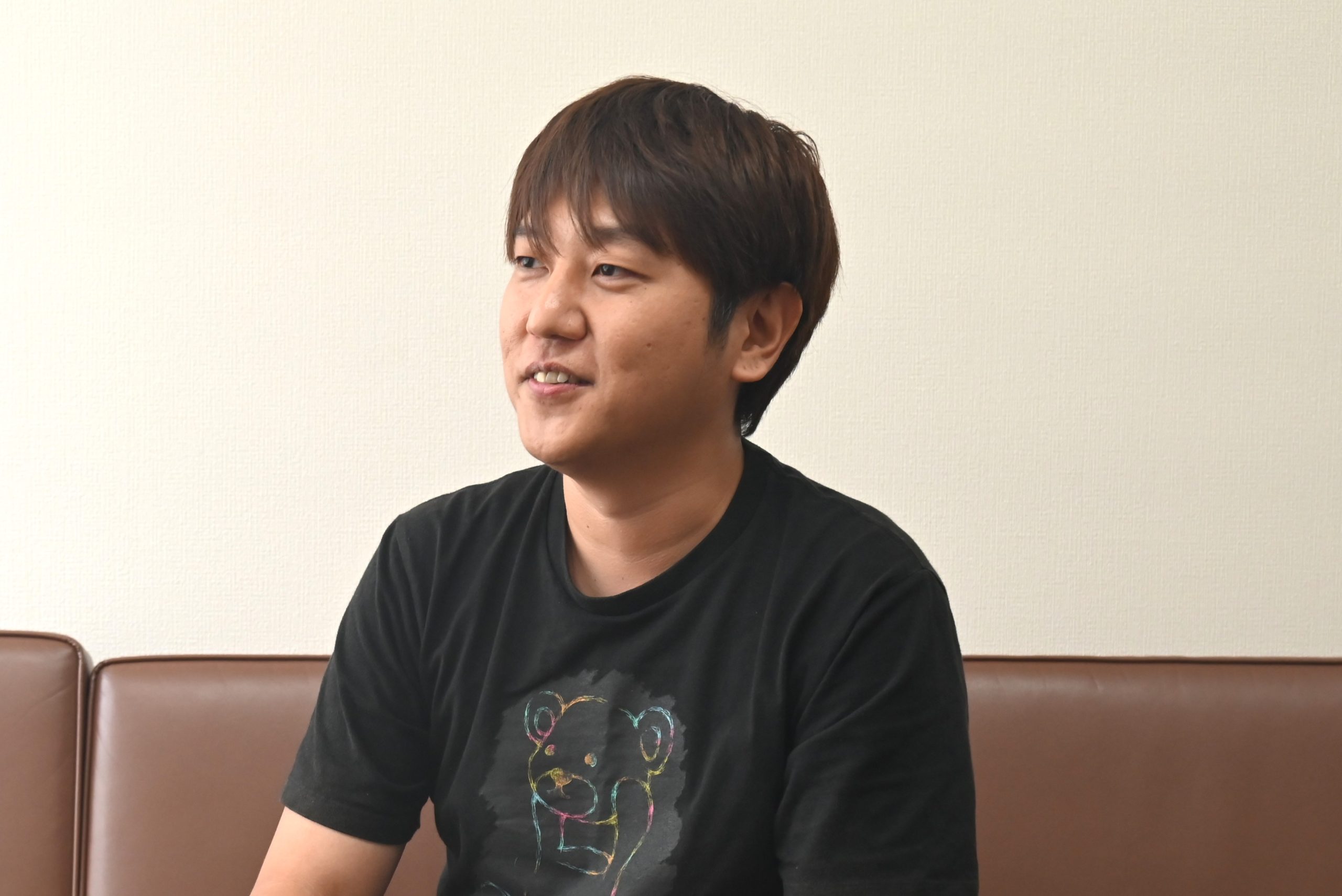
System Department 3, System Section 2 Manager
Ryo Shimada
■Pressing issues of “performance” and “maintenance” faced by the on-premise environment
Life Card has been developing its website and applications in-house, pursuing simple and easy-to-use UI/UX through rapid improvements that reflect user feedback. On the other hand, many of the important business systems that support the company’s business have been operated on-premise. One of these systems, the merchant management system, is responsible for managing and screening merchants and controlling credit card fraud. This system stores information on tens of thousands of merchants, and from the standpoint of business continuity, it is critical that the system must not be shut down. The merchant management system had been in use for a long period of time and was facing issues in terms of performance and maintenance.
Ryo Shimada, Manager of System Section 2, System Department 3, Life Card, said, “What we felt was particularly problematic was the maintenance aspect of the system. This system was built in 2015, and the hardware EOL (End of Life) was coming up in March 2024. Prior to the renewal, a disk failure had occurred, and although the system did not stop immediately, it did affect the ability to obtain backups,” he recalled.
Why TDC Software was selected
■Trust and professionalism
To solve the problem, the company decided to proceed with a project to upgrade its merchant management system. To ensure the success of the project, Life Card carefully selected a partner to support the project. After comparing several candidates, TDC Software (TDC) was selected. The main reason for the selection was the long-term relationship of trust that had been built with Life Card over the past 40 years.
TDC had been a development and maintenance partner of Life Card for many years, providing resident support services, and had members who were familiar with the functions and features of the Life Card system. In addition, the ability of members with this knowledge to work smoothly with other resident partners was a major advantage for TDC.
TDC Proposals and Solutions

Payments Division, Financial Systems Business Unit
Manager, Payments 2 Department
Naoya Miyata
Naoya Miyata, Senior Manager, TDC Software, and General Manager, Payments 2 Department, Payments Management Division, Financial Systems Business Group, said, “For the system renewal, TDC presented two proposals: one was to continue with on-premise and the other was to migrate to AWS. However, we decided that the risk was too high if the system remained on-premise, and we strongly recommended a migration to AWS based on our belief that the infrastructure should be renewed quickly,” he said.
Although there were disk failures, the merchant management system application itself was operating stably. Therefore, it would have been far less time-consuming to test and far less risky to change the infrastructure if the hardware was renewed while the system was still on-premise. However, TDC, with an eye on future business growth, thought that the cloud, with its flexible expansion capabilities, would be the best solution, and strongly recommended the switch to AWS, even if the transition would be somewhat time-consuming. This was not an easy and safe solution (hardware renewal on-premise), but a proposal based on future business growth.
■ AWS migration of critical systems that cannot be stopped, realization of requirements and quick response to troubles
In this AWS migration, the requirements were to speedily respond with a main lift to the cloud without making major modifications to existing system functions, and to complete the migration by March 2024, the deadline for extending the server maintenance period. The requirement was to complete the migration by March 2024, the deadline for extending the server maintenance period.
In addition, “availability” was an important requirement. Operations such as merchant screening, registration, and fraud management cannot be allowed to stop, and any stoppage would have an extremely large impact on operations. Therefore, a high level of availability was required. The disaster recovery (DR) configuration was not used this time because of the difficulty of synchronizing and coordinating with the main system, but a “multi-AZ” configuration was adopted to achieve high availability by distributing the system across multiple geographically separated availability zones (AZ) within a single AWS region to increase overall system availability. In addition, in terms of performance assurance, the company has adopted a “multi-AZ” configuration to achieve high availability.
In terms of performance assurance, the biggest focus was on the sizing of CPU and memory requirements when heavy processing was performed, in addition to the capacity (number of cases assumed after 5 years) considering the increase in data, since the issue of insufficient CPU resources was prominent during the on-premise period. Rather than securing these resources in advance, we proposed a configuration that would allow the flexible scalability of the cloud to be demonstrated so that the system would not stop or freeze when the load increased.

Post-introduction results
Dramatic Improvement of the Operating Environment and Partnership to “Make Challenges Less Challenging”
The migration project took about a year from April 2023, and after the migration to AWS was completed, Life Card’s system operating environment has improved significantly. Mr. Shimada said, “The biggest change is that we no longer have the hardware-related problems that were a concern during the on-premise era. There have been no problems that have affected our business, and the system is operating extremely stably,” he said.
In terms of operations, the biggest change has been the speed of response to any problems. When the system was on-premise, in the event of a problem, it was necessary for a person to rush to the site to deal with the problem, regardless of whether it was on a holiday or at night. However, with the migration to AWS and the establishment of an automated system, this on-site response is no longer necessary, greatly reducing the workload of the staff in charge. The company also appreciates the fact that the automation has eliminated the risk of human error that can occur in manual recovery operations.
Life Card has given high marks to TDC’s work on this project. In particular, when defining requirements with the operations department, TDC was present to provide both technical and communication support, and Mr. Shimada attributes the success of the project to the “high-density requirements definition.

Payments Management Division Payments 2 Department
Chief Expert Masato Matsuyama
Furthermore, TDC solved the issues without Life Card noticing, and the project ran so smoothly that Shimada says , “I don’t remember any serious issues during the project. In fact, there were dozens of issues, but only a few related to the application. The infrastructure issues were quickly addressed by TDC’s infrastructure team before they affected the application.
Masato Matsuyama, Chief Expert, Payments 2 Department, Payments Management Division, Financial Systems Business Unit, TDC Software, said, “We were able to build a ‘anything goes’ relationship with Life Card when issues arose. We were able to proceed with the project successfully because we had built a relationship with Life Card in which we could ‘say anything’ to them when issues arose. We made sure that even the smallest problem was shared immediately and dealt with jointly. I think this prevented a situation where the damage could have been much worse due to a delay in information sharing,” he says. This mindset of “dealing with issues without making them seem like issues” can be said to have supported the success of this project.
TDC’s “hub” function and centralized structure supported the complex project.
The AWS migration project was a complex structure involving the client, Life Card, several specialized teams within TDC (infrastructure, business applications, Trustpro products), and other partners. TDC also served as the hub between the client and other partners.
As mentioned above, TDC has been a resident maintenance partner of Life Card for many years, and there is a strong relationship of trust that has developed over the long history between the two companies. This longstanding relationship has allowed TDC to understand Life Card’s operations and business practices, and to be familiar with the system’s unique functions. In addition, TDC had the great advantage of “being able to communicate smoothly with other partners.
On top of that, TDC has a “make it personal” mindset, which means not only TDC’s success, but also that “it is meaningless unless it works well for Life Card as a whole. TDC’s Matsuyama, who was stationed at Life Card, stated, “I was acquainted with customers, other partners, and TDC internal members, and this ‘make it personal’ attitude enabled smooth collaboration as a hub.
TDC has also changed its internal structure to ensure the success of the project. The previous system in the on-premise environment had separate departments within TDC depending on the problem area. In contrast, TDC’s Matsuyama says, “We have unified the contact points in the business application unit and centralized the response, with a view to post-transition operations. We made it possible for the business team to handle both the infrastructure and the content of the applications as much as possible,” said TDC’s Matsuyama. The ability of the business application team to handle all aspects of the project centrally was one of the project’s success factors, and it also contributed to improved operational response after the migration.
Future Outlook
■ “Cloud First” for the future, and a partnership of one and the same
Life Card has adopted a “Cloud First” policy as a group, and envisions a legacy, monolithic system structure, including critical business systems, that will be converted to microservices and modernized as appropriate in the future. In this process, TDC will be able to leverage its cloud computing capabilities. In this process, TDC’s cloud and AWS skills and DevOps knowledge will be valuable, and the two companies plan to continue their collaboration.
TDC’s Miyata said , “In addition to the business-specific support we have provided to date, we will leverage the resources of TDC as a whole to provide integrated support for Life Card’s overall business. In addition to the business-specific support we have provided to date, we will leverage the resources of TDC as a whole to provide integrated support for Life Card’s overall business. To this end, we intend to pass on to our junior staff, as appropriate, the mindset and technical skills of ‘self-directedness’ that we have cultivated over the past 40 years,” he said. And, viewing the growth of Life Card’s business and TDC’s business growth as “one and the same,” TDC will support Life Card’s future digitalization strategy by providing support in a wider range of areas.