
Hakodate National College of Technology
Design Starter Kit fosters human resources capable of manufacturing from the user's perspective
Interviewee

Department of Production Systems Engineering
Prof. Shinya Koyama
summary
The ” Human Interface” class at the Hakodate National College of Technology* (hereafter referred to as “Hakodate National College of Technology”), Department of Production Systems Engineering, is designed to help students who will go into manufacturing in the future learn about human sensory, perceptual, and cognitive characteristics and to develop a perspective for developing user-friendly interfaces.
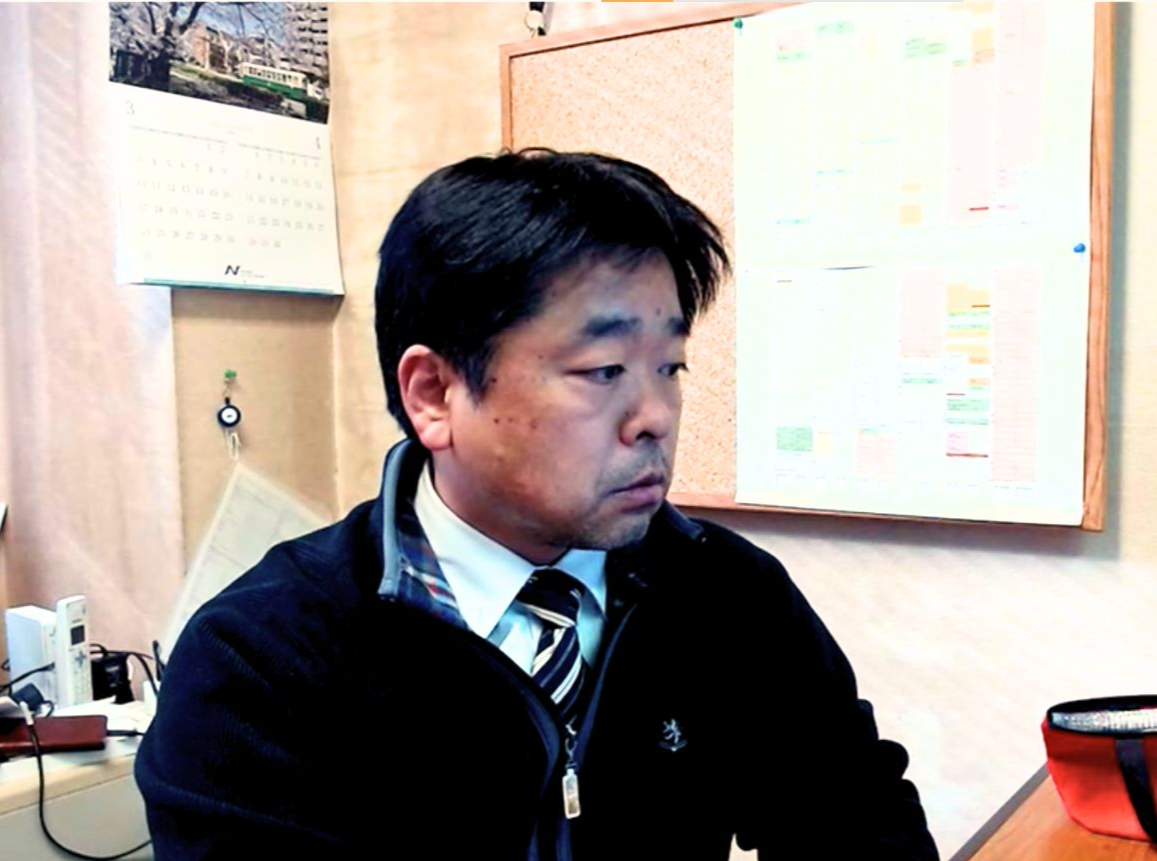
Professor Koyama, who is in charge of the class, expressed his thoughts on the class, “If you are going to make things, I want you to be able to make things that people can use without making mistakes,” and “I want you to learn that the user perspective is important in making things. TDC SOFT Inc. provided the “Design Thinking Starter Kit,” which was used as a practical teaching material in the class for two years.
-
Colleges of technology are educational institutions that aim to nurture practical and creative engineers, specializing in specialized fields such as engineering and information technology.
-
Hakodate National College of Technology has approximately 1,000 students in three departments and six majors. The college has sent out many excellent engineers who have played key roles in the development of industry, and is highly regarded by society, including government agencies, major blue-chip companies, and local firms.
Issues and Background
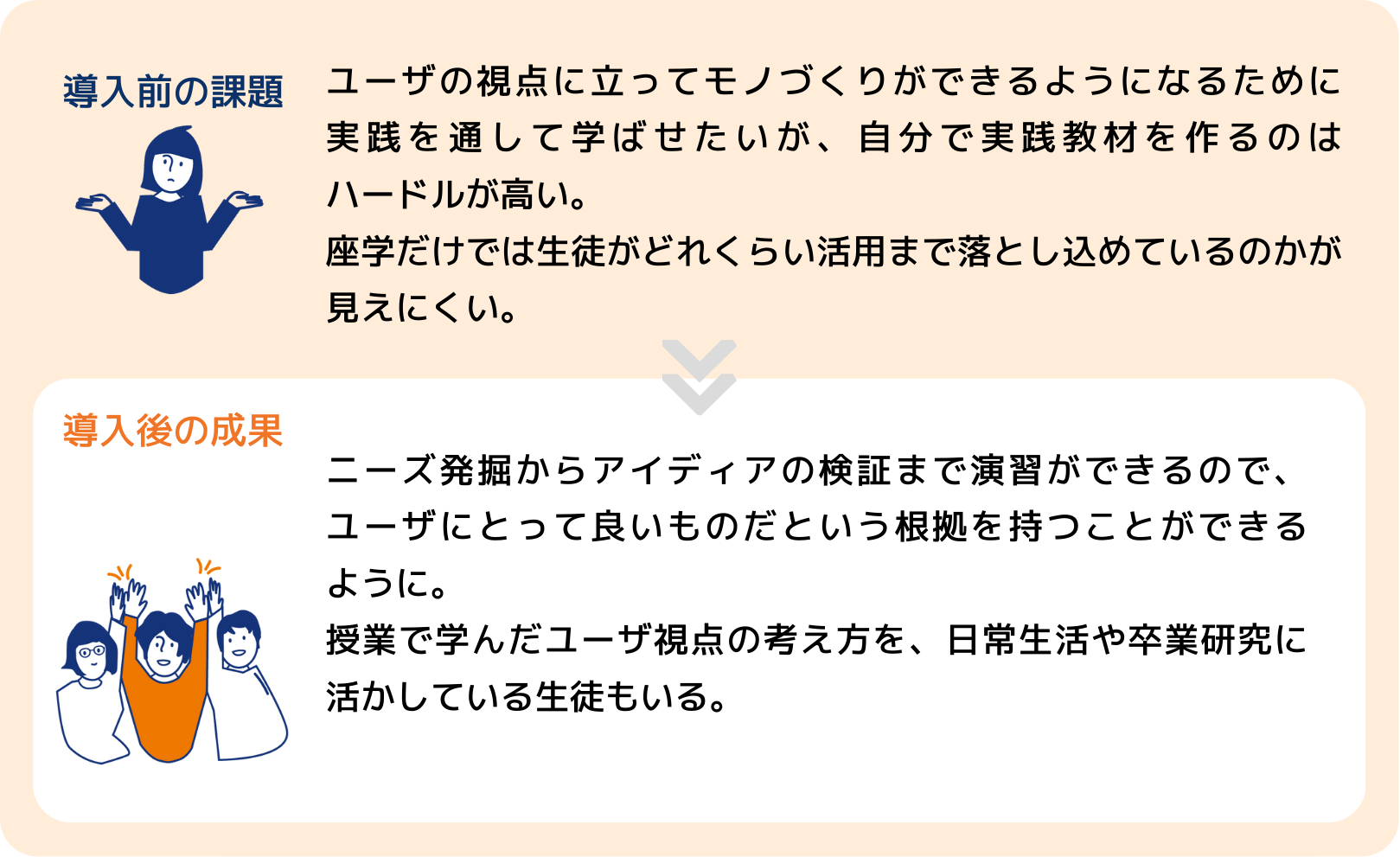
Professor Koyama strongly hopes that his students will be able to create products that are not self-indulgent, but that take the user into consideration when creating things, but he felt that the lack of opportunities to put this into practice was an issue. So far, he has collected examples of BAD UI from SNS and had students answer the bad parts in a quiz format, or given them a report assignment to evaluate a smartphone application, and found that they understood the issue, but it was difficult to see whether or not they could utilize the information correctly.
What is the Design Thinking Starter Kit?
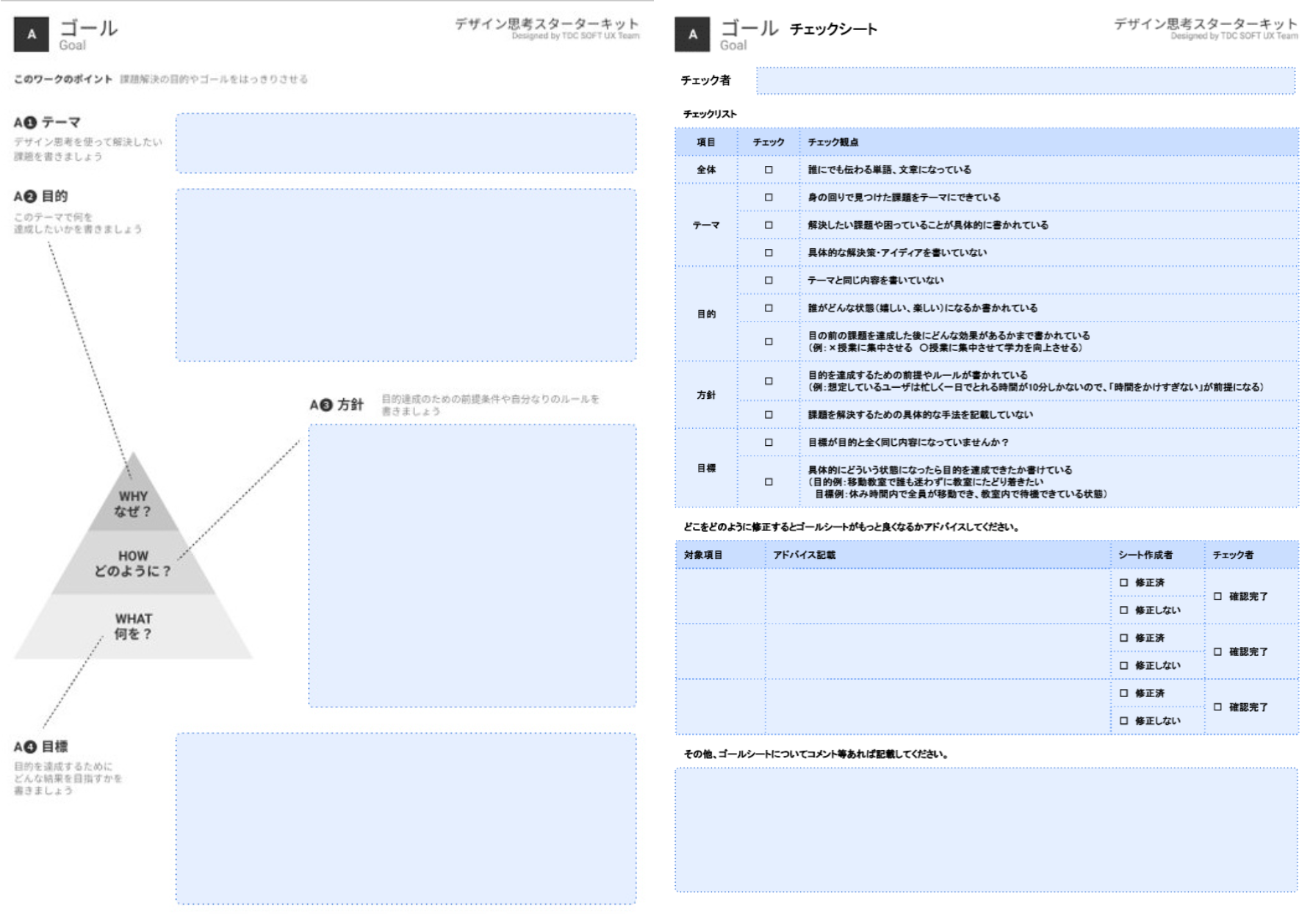
The Design Thinking Starter Kit was developed by TDC SOFT Inc. to enable non-designers to create products and provide services from the user’s perspective by thinking like a designer. The kit consists of 9 worksheets and a checklist to check the quality of the output. The check sheets come as a set with each worksheet, so they can be checked immediately after the worksheet is completed.
The worksheets should be a combination of the following sheets, in any order, depending on the topic and the time available.

For more information about the Design Thinking Starter Kit, please feel free to contact us through the “Contact Us” form.
Starter Kit Application Process
Services were provided for two years, FY2022 and FY2023, with the following flow of utilization of the starter kit in the first year.
The following is a flow chart of the first year’s utilization.
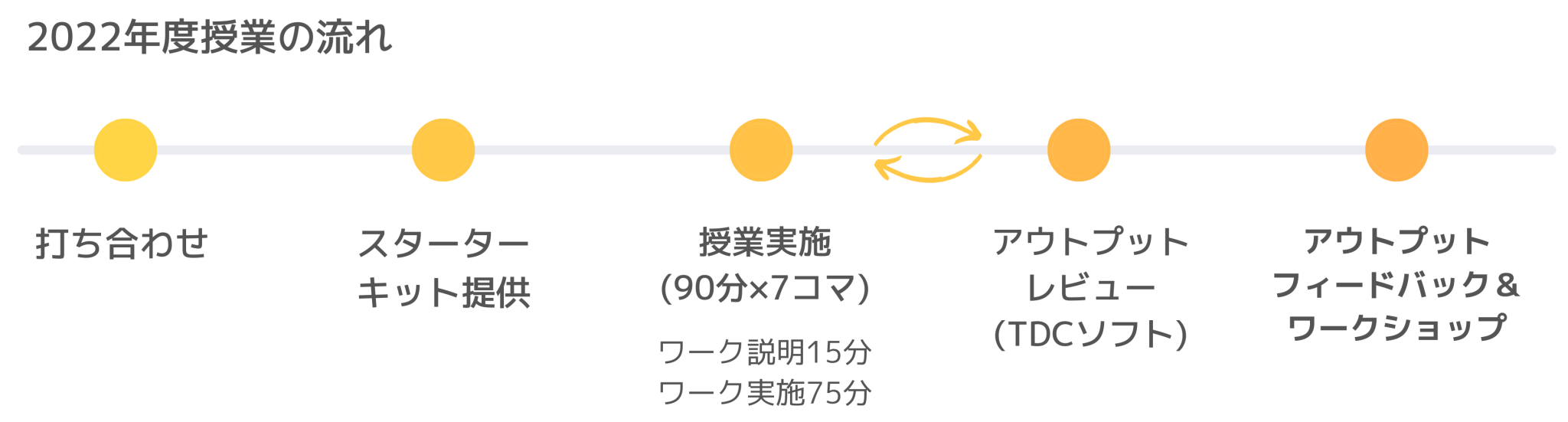
In FY2022, TDC SOFT Inc. reviewed the outputs from the classes on a weekly basis. However, due to the limited class time, feedback could not be reflected in the outputs, making it difficult to correctly capture potential user needs and create high quality outputs. Therefore, as a kaizen measure, we created an output check sheet and changed the timing of the interview and analysis workshop, and the following flow was utilized in the second year.
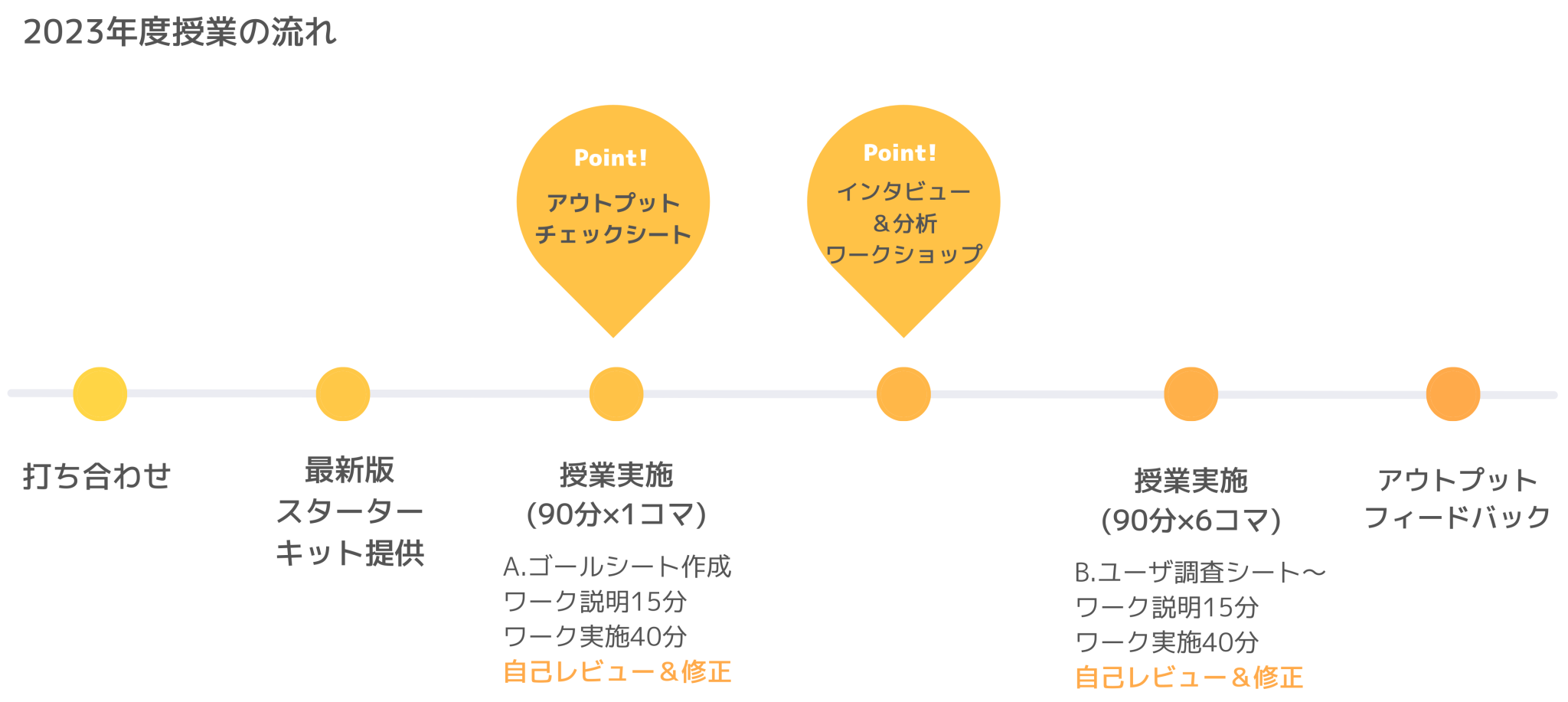
The following section describes the “Interview & Analysis Workshop” and “Output Check Sheet,” which are the key points of the classes utilizing the Starter Kit.
Point1. output check sheet
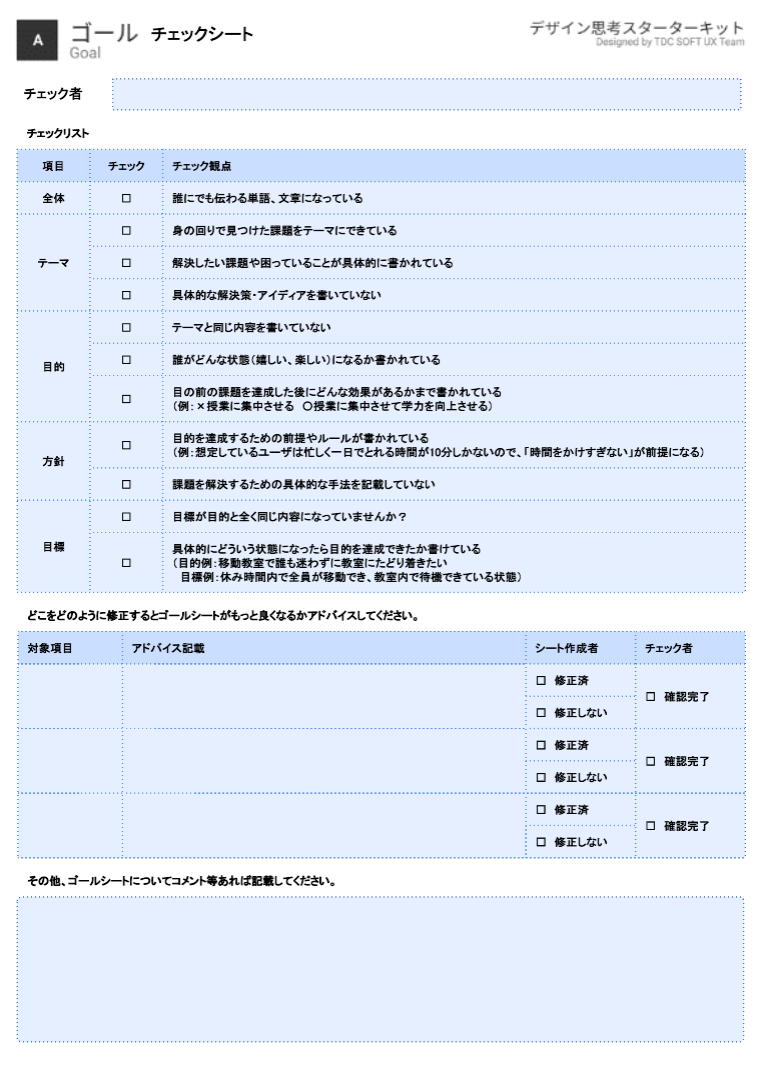
If a period of time elapses between the creation of outputs and the receipt of feedback, as was the case in FY2022, there is a lack of speed and people forget what they were thinking at the time. Therefore, an output check sheet was created to enable self- and peer-reviews immediately after outputs were created.
The checklist was created from the perspective of the ease with which the content could be communicated and whether or not it fell into the mistakes that beginners tend to make. In addition, when a peer review was conducted, a column was provided for the reviewer to enter advice. The purpose of the checklist is to help the reviewers develop the ability to find areas for improvement in their own output by putting themselves in the position of looking at the output of others, and to help them improve the quality of their own output.
As a result of using the checklist, 57% of the students revised their initial output.
Some of the students were able to solve the theme issue +@ create value through self-rv, which is introduced below.

Point2. interview & analysis workshop
In order to create something that will truly delight users, it is important to correctly grasp their latent needs. However, the most difficult part for beginners in design thinking is the process of capturing users’ latent needs, and the students who worked on this project in FY2022 tended to focus on visible needs and solutions to them, without being able to capture users’ latent needs well.
Therefore, in FY2023, TDC SOFT Inc. conducted a workshop where students could experience interviewing and analyzing users as practice before they engage in user surveys.
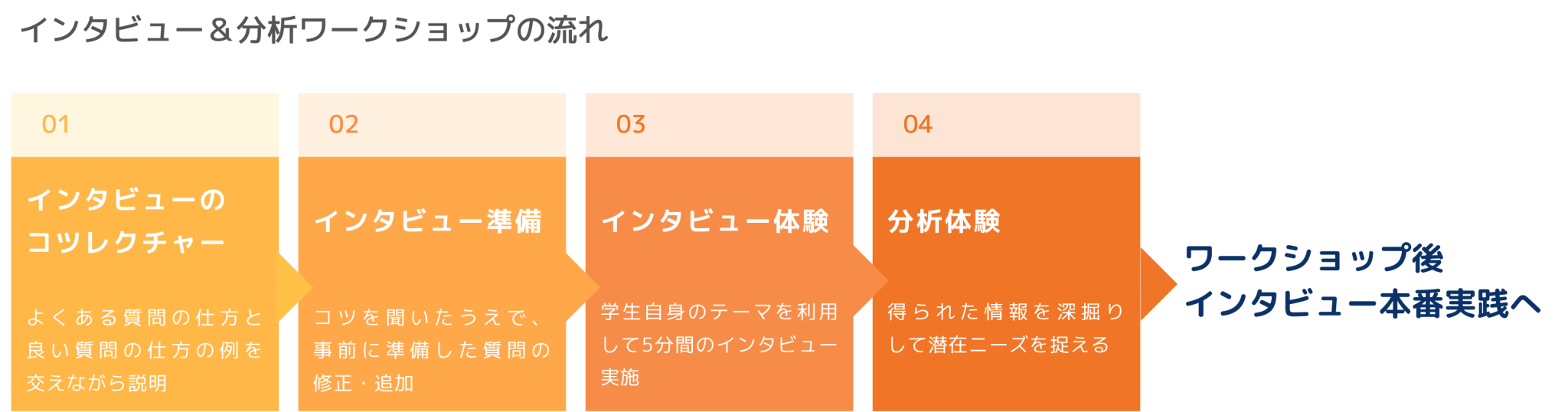
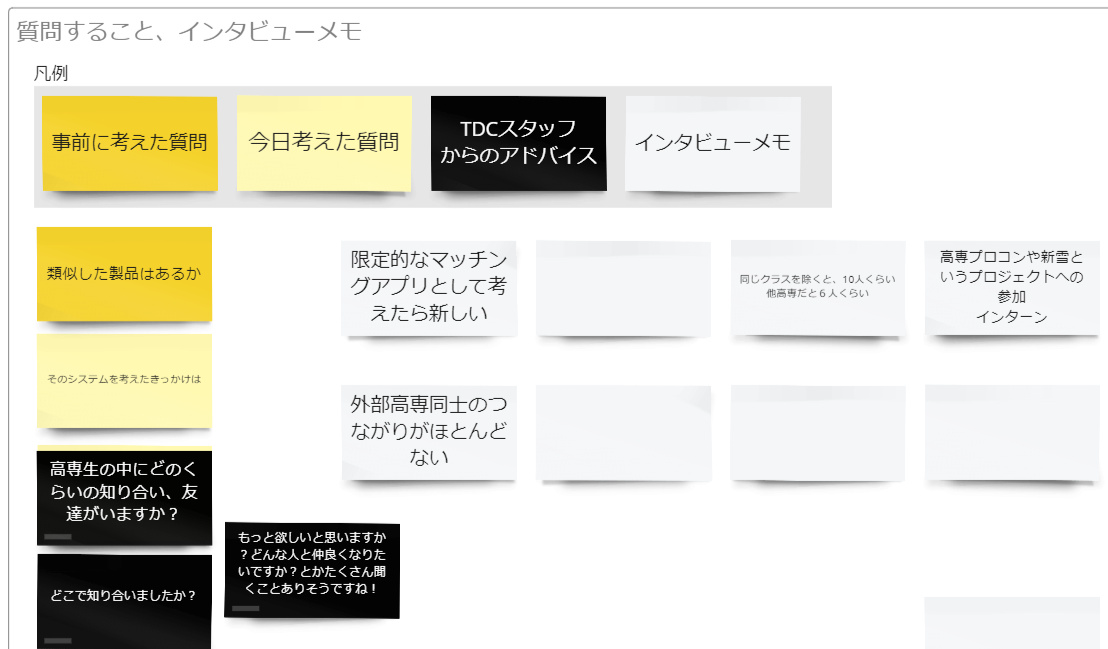
At the beginning of the workshop, TDC SOFT Inc. provided students with interview tips that it considered particularly important based on its past experience, and reviewed the questions that students had thought of in advance and added questions. At this time, we sent questions and advice from perspectives that were lacking in the students’ thinking so that they could ask questions in a way that would elicit better responses during the actual interview. In the same way, during the analysis experience, we described questions for students who were unable to generate in-depth questions on their own, and conveyed our thinking on how to think when digging deeper.
The workshop improved the students’ level of knowledge and practical skills in user research. Professor Koyama also expressed his hope for results that had not been achieved in previous classes, saying, “Students who are usually the type to work quietly on their own tasks were lively and conversational during the interview experience.
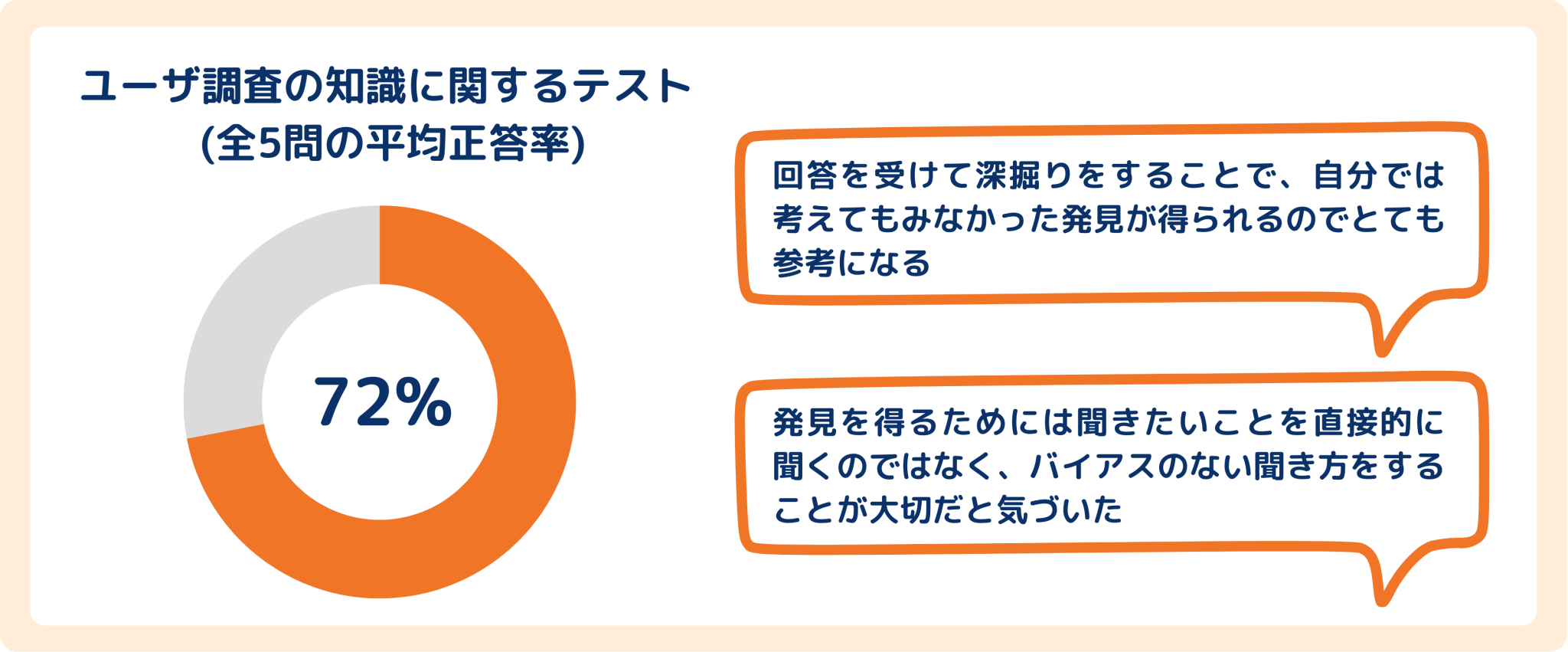
summary
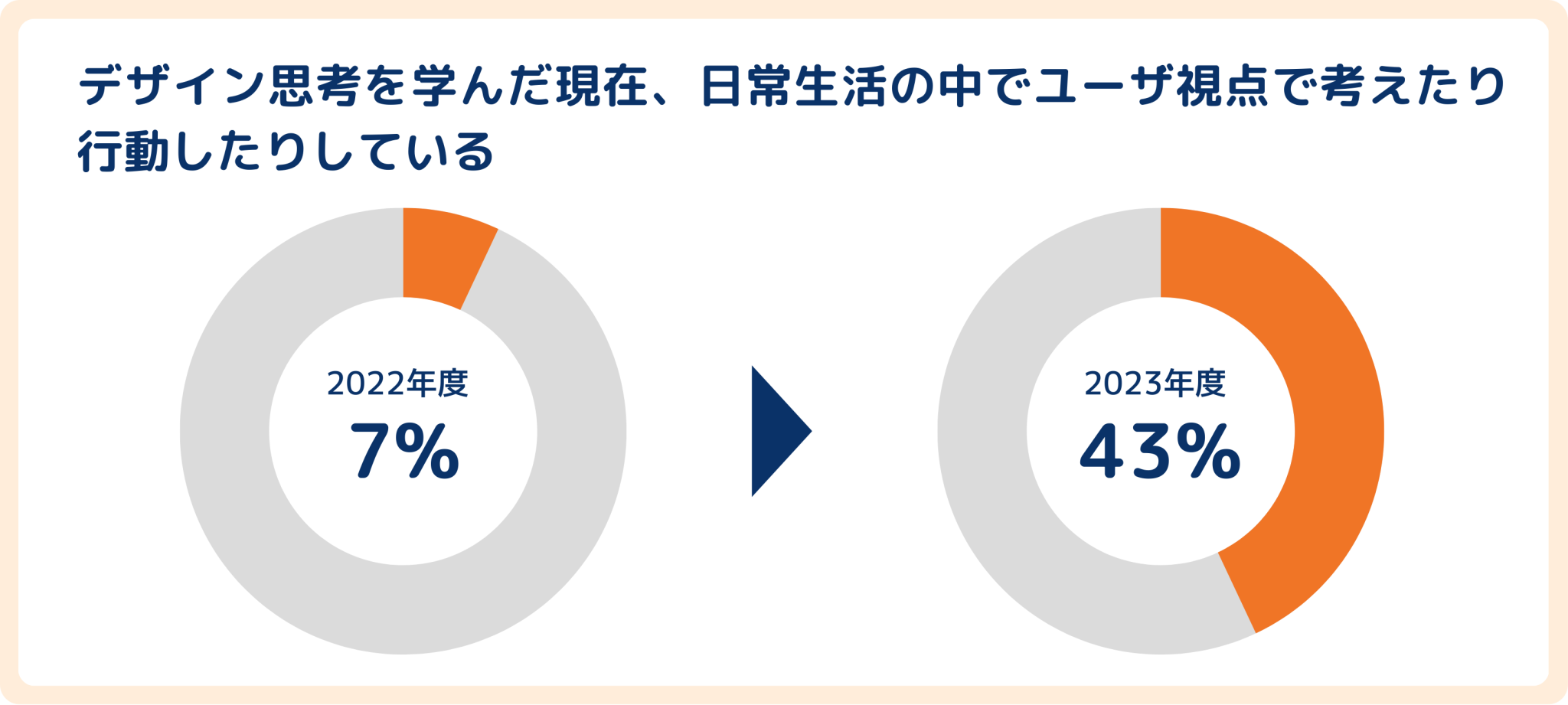
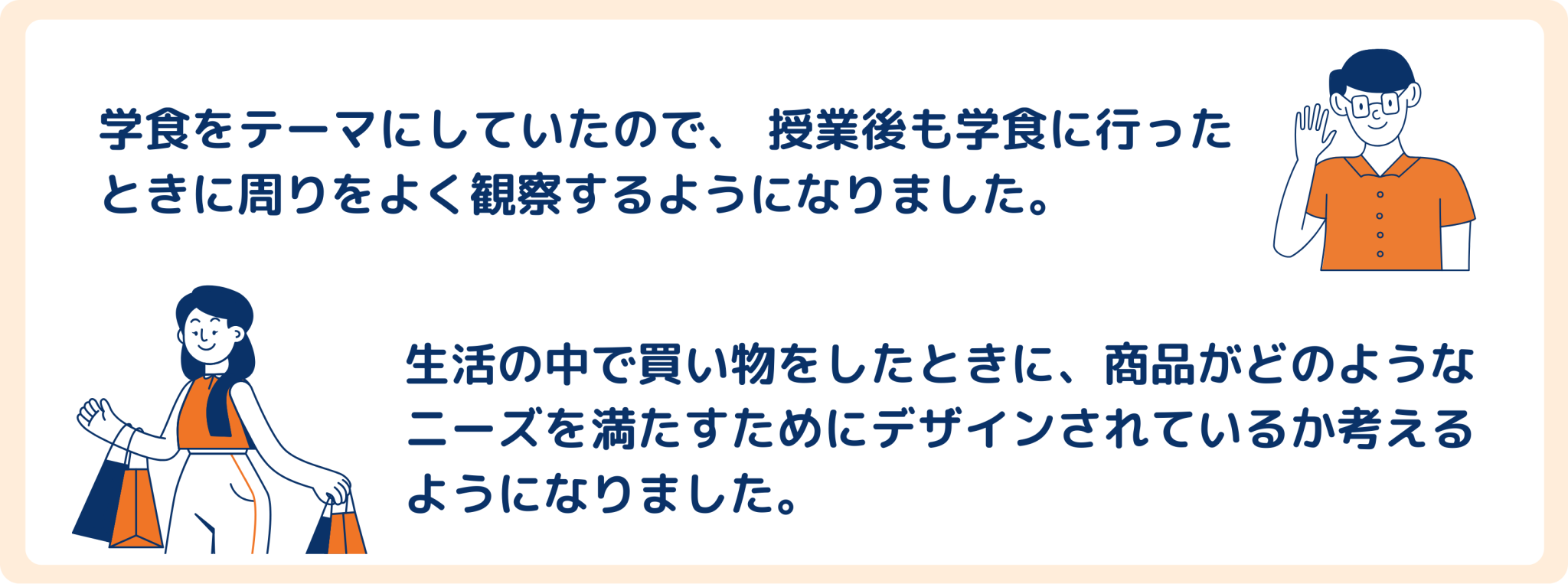
A survey of students after the Human Interface class of 2023 showed that the number of students thinking and acting from the user’s point of view in their daily lives increased by 36% compared to 2022.
In addition, according to Professor Koyama, the graduates of the 2022 class also used the interview method and the method of identifying latent needs in their graduation research. He also commented that using the starter kit in the classroom made it easier to explain Design Thinking to the students.
We have received inquiries from other schools regarding the use of the starter kit, and the importance of manufacturing from the user’s perspective will increase in the future. TDC SOFT Inc. hopes to contribute to the development of human resources like the Hakodate National College of Technology students, who can enrich people’s lives by taking a user-oriented and considerate viewpoint.

Hakodate National College of Technology
Hakodate National College of Technology (Hakodate National College of Technology) was established in April 1962 as the first school of technical college (college of technology), and celebrates its 60th anniversary in 2022. In order to nurture global engineers with the "ability to think and act on their own" toward finding and solving social issues beyond national boundaries, in addition to practical specialized technical education such as experiments and practical training, international exchange activities and STEAM education have been introduced while strengthening cooperation with overseas educational institutions.
Technologies Used