Agile Scrum Experience” Workshop Event Report
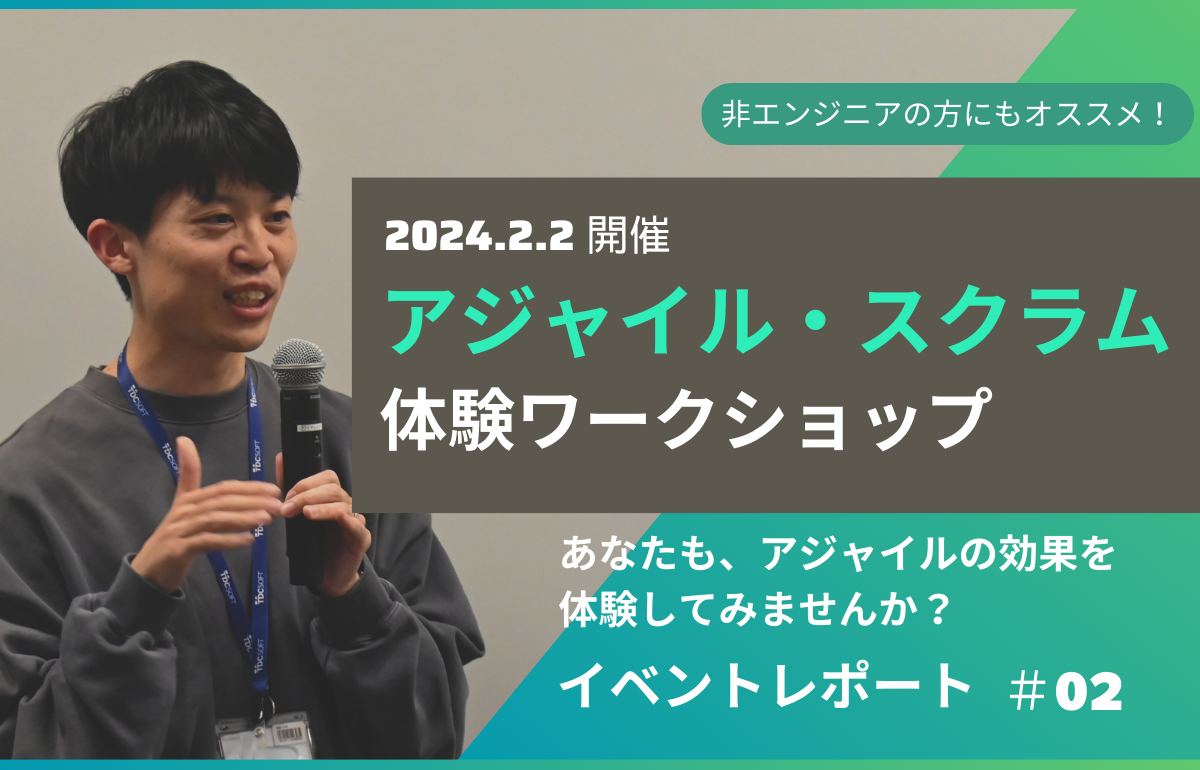
On Friday, 2/2/2024, a workshop was held for those interested in Agile/Scrum and those who have never experienced it, with the aim of giving them a hands-on experience and a better understanding of Agile/Scrum. The workshop was designed for people who are not usually involved in system development by using content other than system development as the subject matter.
This article reports on the workshop.
Workshop Outline
Agile Scrum Experience" workshop to enjoy a value-creating society
Date : Friday, 2024/2/2/2 14:30 – 17:30
Organizer : TDC SOFT Inc.
■ Recommended for:
✅ Those who have learned about Agile and Scrum in class, but have never had hands-on experience.
✅ In implementing Agile and Scrum in your own team, project or organization, Those who would like to experience the Scrum process
✅ Those who have heard the terms Agile and Scrum and are interested
✅ Those who would like to be exposed to the Agile mindset
Lecturers
The lecturer was Masaharu Ono, a certified Scrum Master who also spoke at the Miro event.
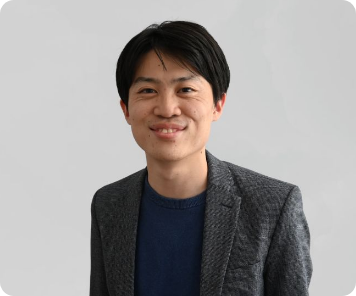
Certified ScrumMaster® Masaharu Ono
He has experience in many projects as a Scrum Master and Agile Coach. In addition to projects, he continues to help teams become more agile through Scrum training instructors and workshops. He is currently working as a Reversal Evangelist so that more people can experience the fun and effectiveness of Reversal.
Event Report
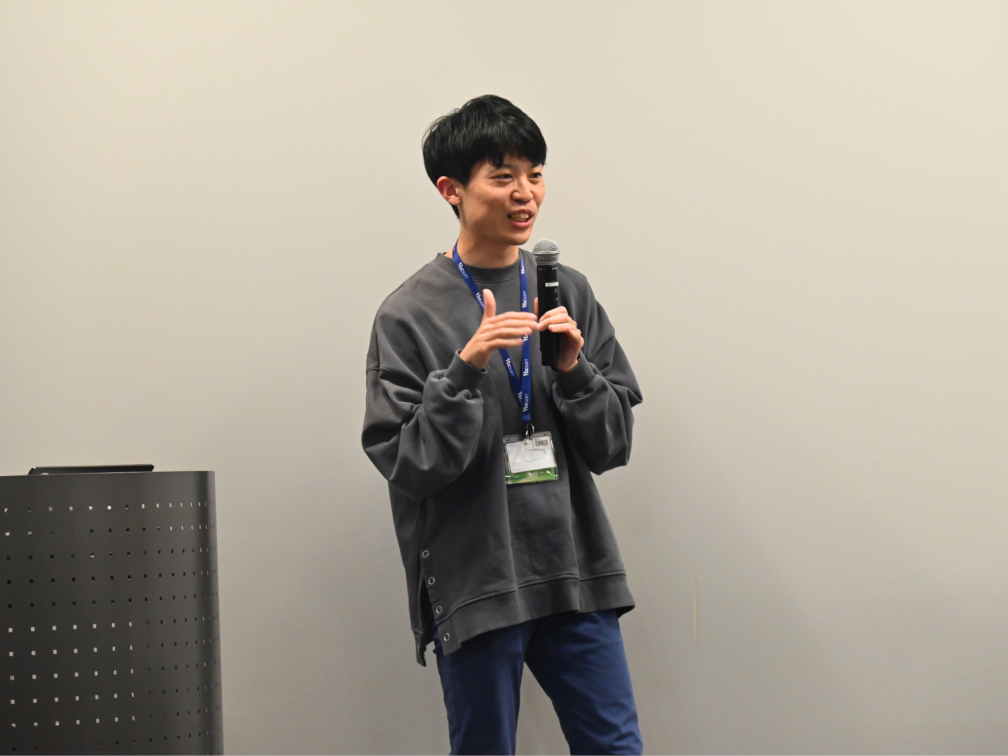
The lecture portion consisted of a classroom lecture on Agile/Scrum, and the work portion consisted of a workshop-style Agile experience. The lecture part on Agile/Scrum included the following explanations
1. About Agile Scrum
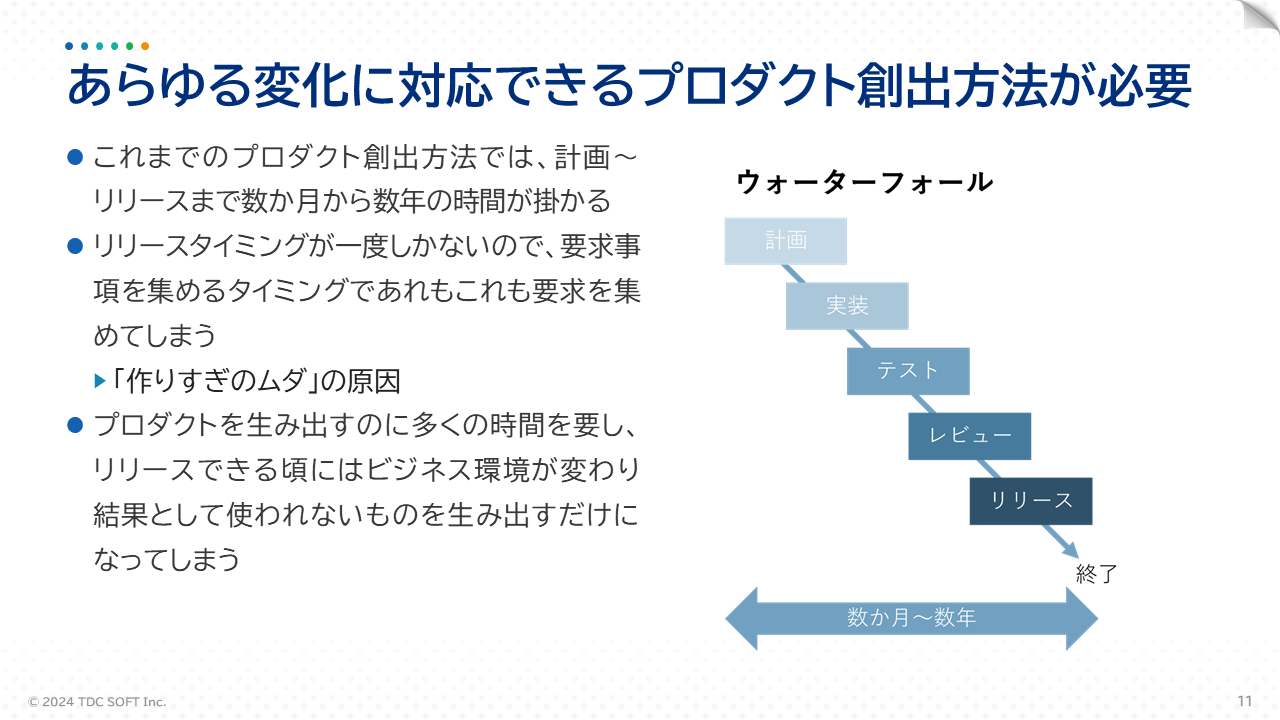
In today’s rapidly changing world, where we do not know what will happen in the future, it will be difficult to survive in the age of VUCA if we continue to create products as we have in the past. In order to respond to today’s rapidly changing world, it is necessary to have a product creation method that can adapt to all kinds of changes. Agile is a method that responds to change, accepts change, and provides products that are valuable to users.
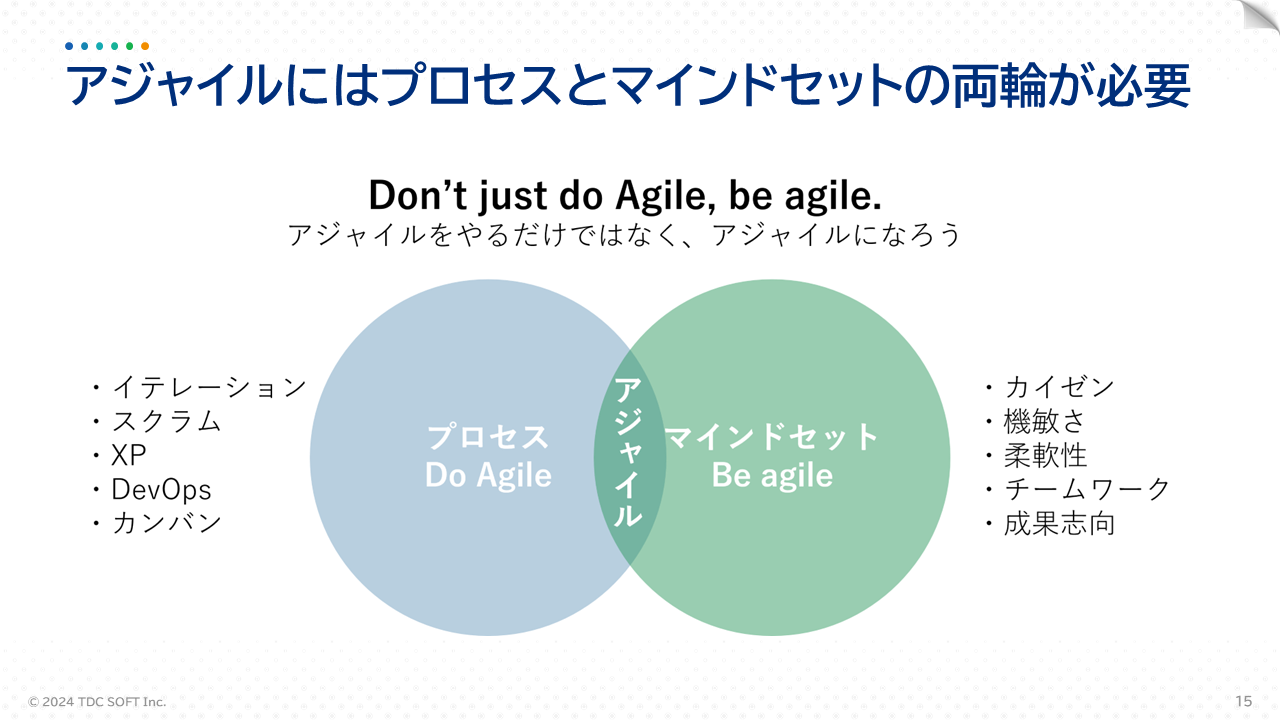
Agile is not just a methodology or method, but it cannot be successful unless it is accompanied by the thinking and mindset necessary to adapt to change and continue to provide value.
The Agile Software Development Manifesto, while acknowledging the value of what has been considered important in the past, defines what is more important, and this way of thinking is probably understood in many business areas.
The Software Development Declaration is part of the mindset. The principles that are desirable in realizing them. In other words, the attitude toward fundamental efforts and the ideal attitude are defined in the Principles Behind the Agile Declaration.
The Agile Software Development Declaration, including its principles, is explained in an easy-to-understand manner by the Information-technology Promotion Agency, Japan (IPA). Agile is about having an agile mindset and taking an agile approach, and it is important to note that process alone does not work well.
Various frameworks exist to realize such agile.
-
scrum
-
XP
-
SAFe
-
Crystal
-
Disciplined Agile Framework
-
Large Scale Scrum
-
Nexus
-
Scrum of Scrums
Among them, “Scrum” is the most used framework in Agile practice. It has been used mostly in the software development domain, but recently it has been used in various domains beyond that domain. Specifically, it is also used in marketing, sales, and internal committee activities within TDC SOFT.
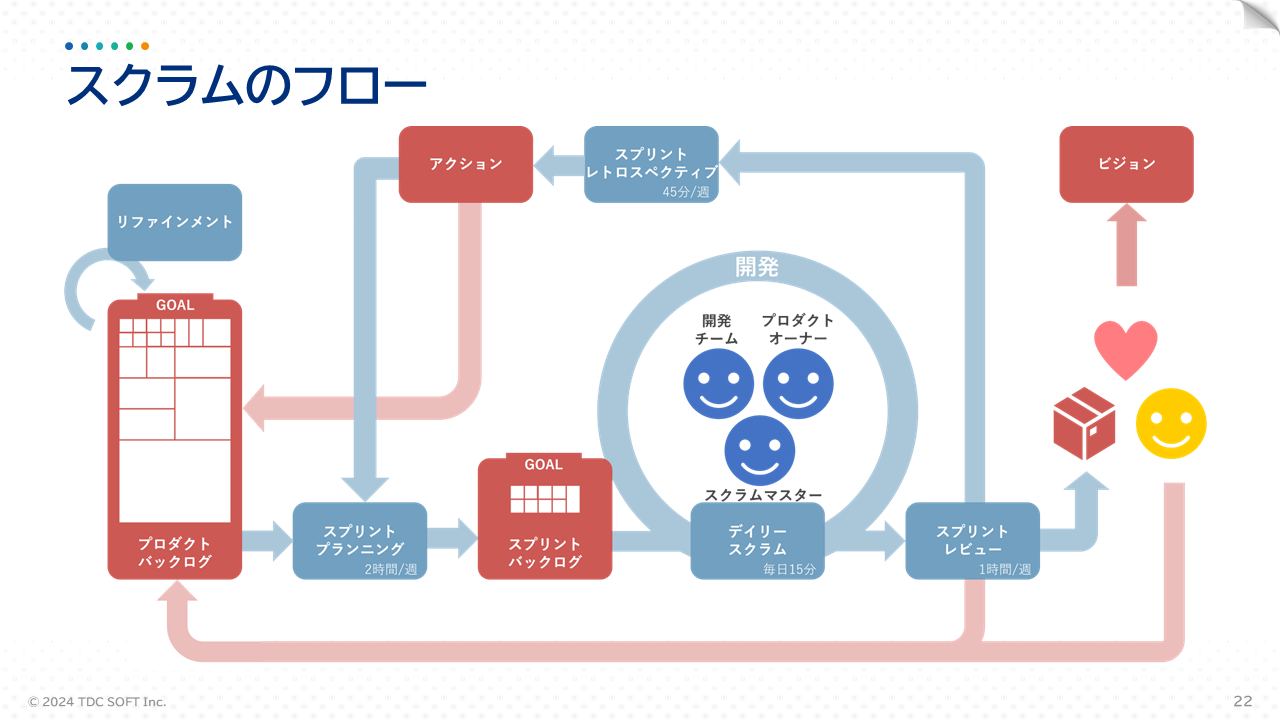
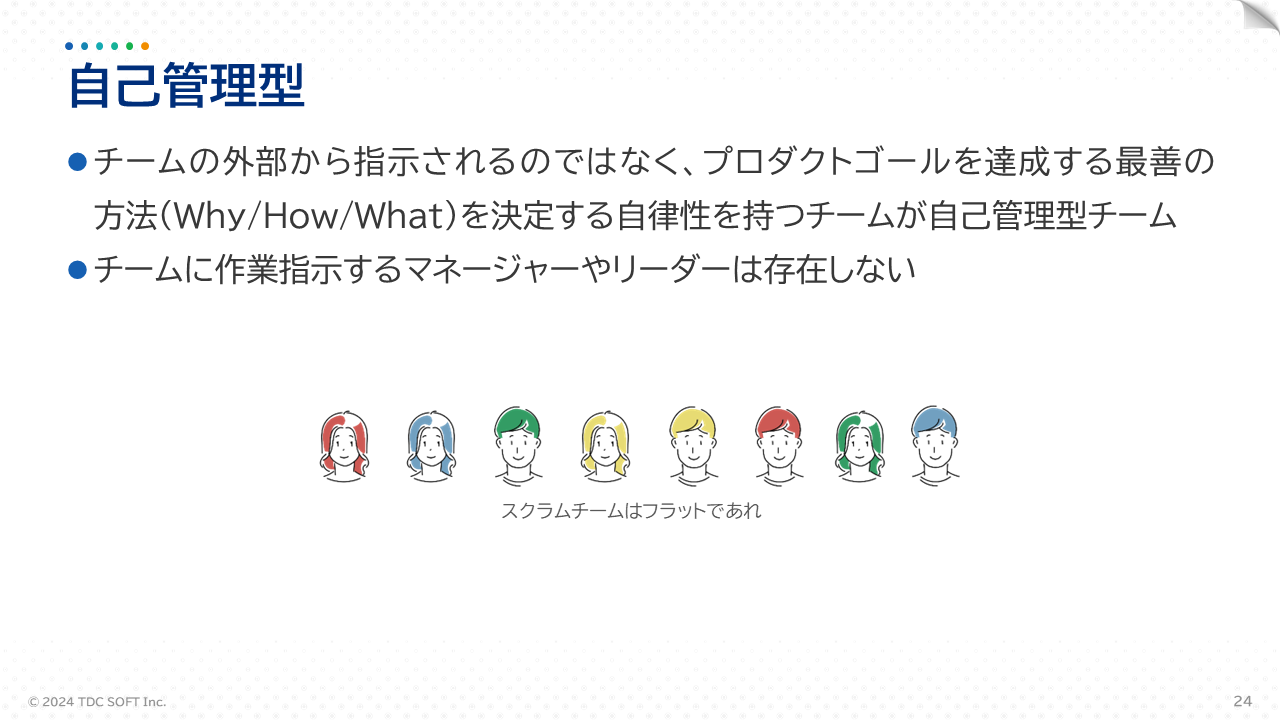
In Scrum, there is a Scrum Guide, and it is possible to “just get started” by following the Guide. However, it takes time and experience to implement Scrum in an agile manner, following an agile mindset. In addition, Scrum teams need to be self-managed teams that have the autonomy to determine the best way to achieve the product goals (Why/How/What), rather than being directed from outside the team.
2. Scrum Experience Workshop
The work portion of the Agile-Scrum experience involved a flow of experiencing Agile by forming teams of four or five people and utilizing Scrum to achieve a given goal.
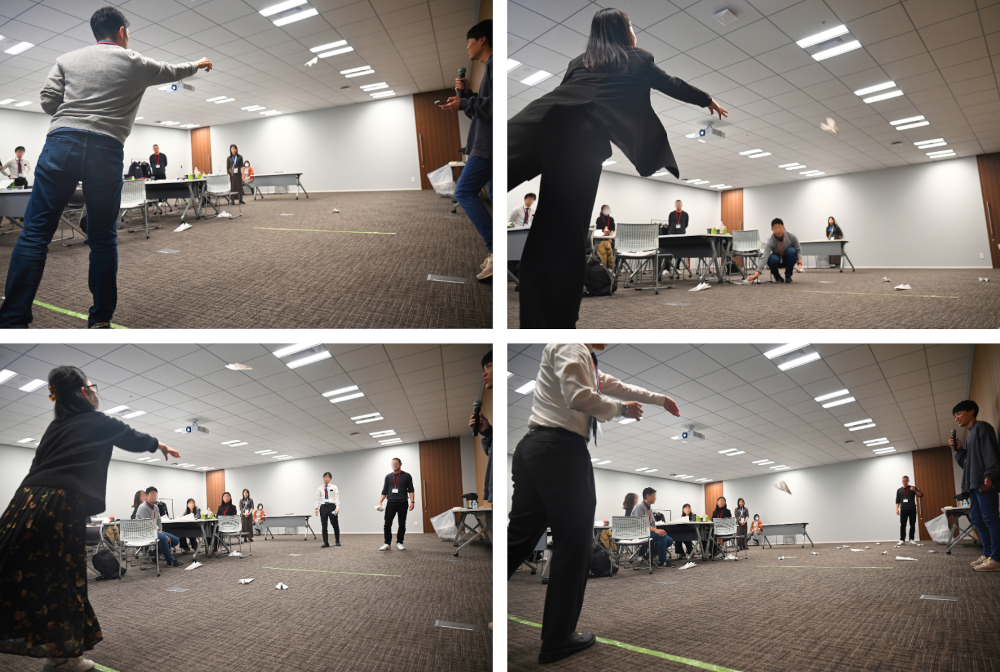
First, Mr. Ono set the goal of “manufacturing a large number of paper airplanes that can fly over 3 meters. The goal was defined as “to make as many paper airplanes as possible that fly over 3 meters.” The paper airplanes had to be in the shape of airplanes, not balls of paper.
The time limit for making paper airplanes was set, and the process consisted of four steps: “planning,” “manufacturing,” “inspection,” and “review. The work is divided into four processes: “planning,” “manufacturing,” “inspection,” and “review. These four processes were repeated for three sets.
The four processes specifically involve the following tasks
*Names in parentheses ( ) are the names used in the scrum.
(1) Sprint Planning:
Set a goal for how many paper airplanes that fly at least 3 meters can be manufactured in an hour. The team will discuss the processes (tasks) necessary for manufacturing.
(2) Manufacturing:
Implement the processes established in the plan to manufacture paper airplanes.
(3) Inspection (Sprint Review):
Fly a paper airplane and inspect whether it actually flies more than 3 meters.
(4) Reflection (Retrospective):
Reflect on each process from 1) to 3), come up with kaizen ideas, and implement them in the next set (sprint).
Each team’s performance as a team visibly improved as they turned in their sprints, and at the inspection, the entire audience watched to see if they could fly more than 3 meters, and cheered the results of the other teams, creating an atmosphere of excitement that brought the entire venue together.
| Team Name | Sprint 1 | Sprint 2 | final sprint |
|---|---|---|---|
| Team A | Target: 4 aircraft Result: 1 aircraft | Target: 21 aircraft Result: 13 aircraft | Target: 24 aircraft Result: 26 aircraft |
| Team B | Target: 5 aircraft Result: 3 aircraft | Target: 16 aircraft Result: 17 aircraft | Target: 20 aircraft Result: 21 aircraft |
Each repeated sprint reduces the gap between goals and results and increases production
With each sprint, the conversation became more constructive and the exchange of ideas more active. The question was, “How can we efficiently produce paper airplanes that achieve our product goals?” It was surprising to see the team, which had just been formed today, appear to be a group of professionals in the field (paper plane production), as the entire team was discussing this issue.
With the audience in high spirits, Mr. Ono concluded the workshop with a review of the workshop.
Testimonials from Participants
We have received the following comments from those who attended the event.
-
It was a very meaningful time to experience the scrum process.
-
I am glad I had the opportunity to experience this because I never had a chance to put it into practice.
-
Improved understanding of the mindset part of Agile.
Scrum Training Services
TDC SOFT Inc. offers training programs for Scrum education, led by members with a wealth of practical experience. There is a “Basic Course” menu that provides both classroom learning and hands-on experience of Scrum, as in this event, and a “Practical Course” menu that allows participants to experience Scrum theory and the process of implementing it, such as web application development and Scrum guide creation, to acquire the ability to put it into practice in projects.
If you are interested in the contents, please take a look at the details.
Technologies Used