
UX Design Service Application Example #01
The first UX design project by a manufacturer specializing in fusion cutting equipment.
From product differentiation to experience differentiation.

A customer that manufactures and sells fusing and welding equipment sells its products through distributors.
The client was faced with two challenges: acquiring new users and improving the unit price of existing customers (* up-selling and cross-selling) under circumstances where differentiation of the products themselves was difficult. As a result of interviews, it became clear that the client needed to develop a long-term plan for the next several years, rather than just implementing the plan by hand, so we provided support for new service planning. We provided support for the planning of new services, as it became clear that it was necessary to develop a long-term plan for the next several years, rather than just implementing the plan while the client was still in the process of exploring the issue. We also provided basic UX design training to enable the client to plan from the user’s perspective. As a result, know-how on UX design and planning was accumulated within the client, enabling them to make their own plans to tackle long-term issues.
-
Up-selling … getting a user to purchase a higher level product than the one they are currently using
Cross-selling … getting a user to purchase another product that is related to the one they are buying, together.
Issues and Background
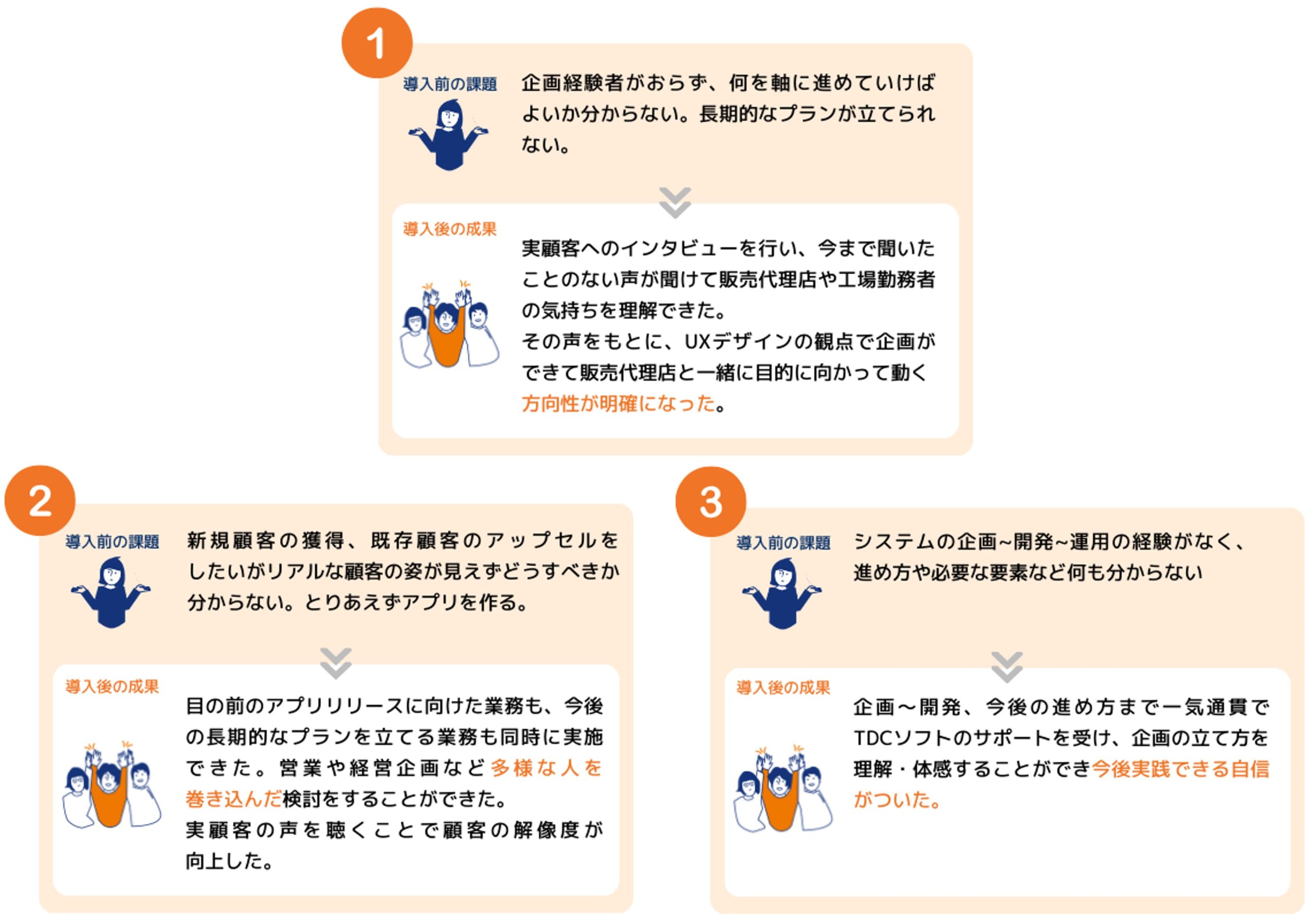
The customer is a company with a long history and has the advantage of being trusted by users (distributors and factory workers) because of its high-quality products. They also have a high market share for their products. In order for such a client to continue to win over the competition and remain a company that is loved by users for a long time to come, it is necessary to acquire new users and increase the unit price of existing users (up-selling and cross-selling).
However, since products in the client’s industry must conform to JIS, JWA, and other standards, it is difficult to differentiate from competitors in terms of product performance and design, and there are limits to how much differentiation can be achieved in terms of price. Another issue is that there is no one with planning experience within the customer, making it difficult to formulate a concrete, long-term plan.
In order to solve these problems, it was decided to differentiate not in terms of the product itself, but rather in terms of the experience to help the user do a better job. The main users in this case were the distributors who deliver the products to the factories, but we also considered how to make the experience better for the factory workers who actually use the products.
Services Utilized
The service provided to the client this time was “new service planning support.
We proposed this service because the client had no experience in system development planning and did not have a wealth of knowledge about planning itself or how to incorporate UX design.
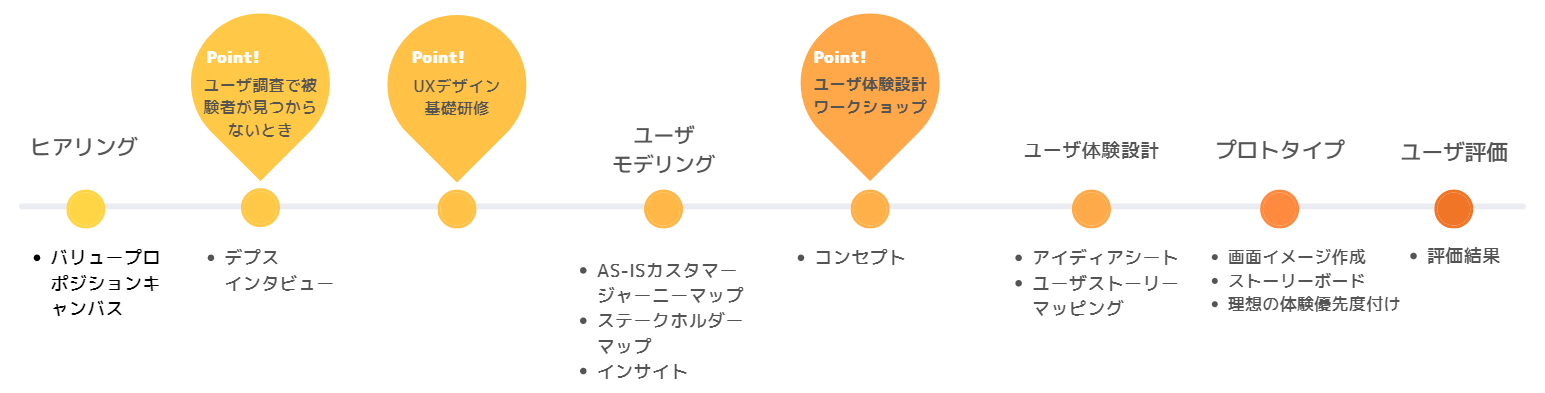
New Service Planning Support Flow
Point (1)
What to do when no subjects are found in a user survey
In conducting the user survey, there was a problem of finding “subjects who work for a distributor of fusing and welding equipment” and “subjects who are engaged in fusing and welding work. This was due to the fact that customers and distributors do not usually cooperate with each other, so it was not possible to request cooperation, and that there were no subjects who met the requirements even if a research site was used.
Therefore, we succeeded in gathering subjects for the user survey by implementing the following two measures.
-
Find people who work for distributors of equipment other than fusion and welding equipment
Assuming that even if the products they handle are different, there may be commonalities in the way they think about their work and the difficulties they face, we conducted interviews with distributors of medical equipment manufacturers. -
Actually go to the welding experience by yourself and interview the teacher
In order to know the reality of not only the distributors but also the users who actually use the products, we went to the welding experience and interviewed the teacher who is a welder in his/her day job after the experience.
Point②
UX Design Basic Training
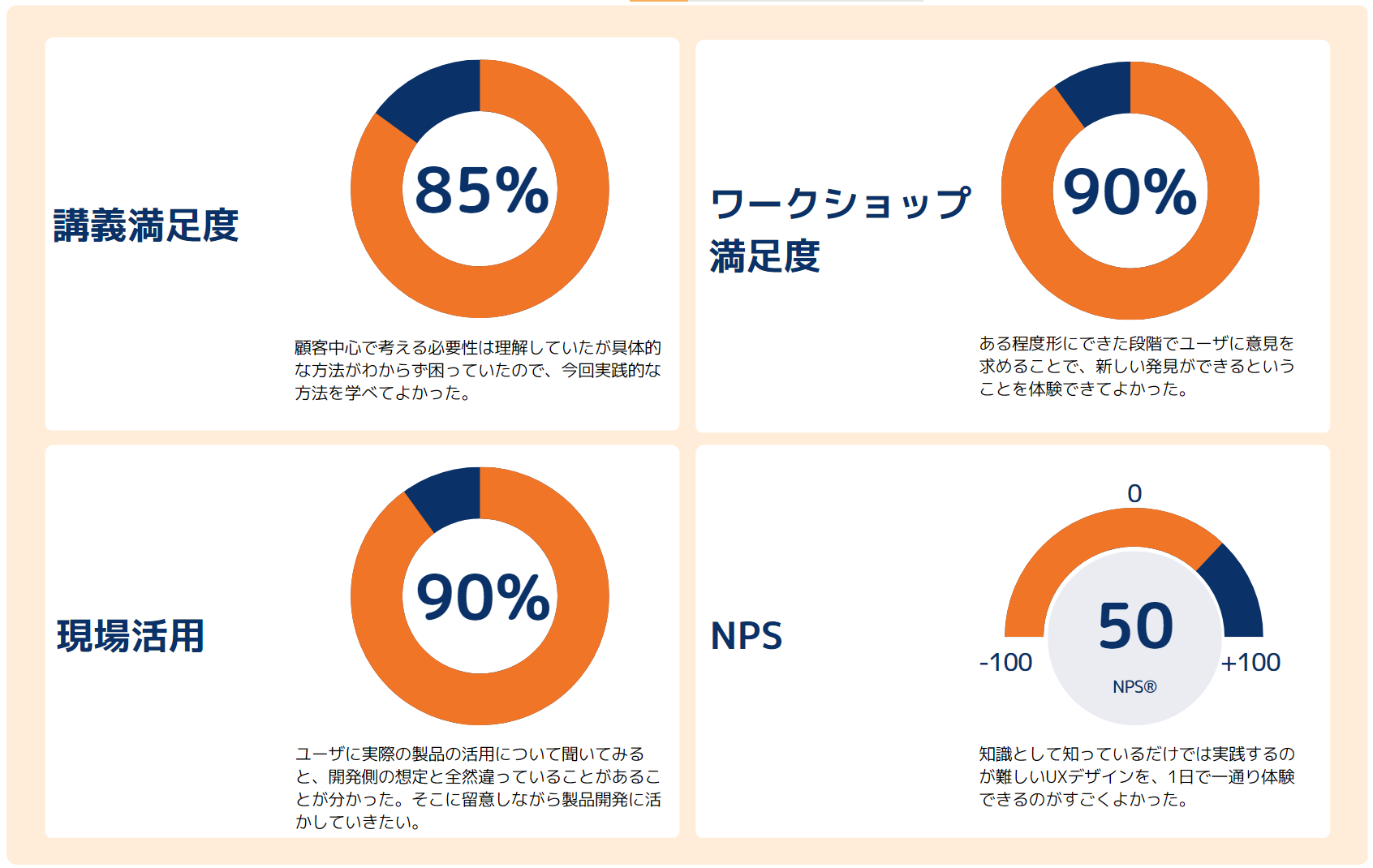
UX design has become a trend in recent years, and its importance is being recognized even outside of the IT industry. The client also felt the need for UX design, but had not had the opportunity to learn about it until now. When we proposed this training as part of our support for new service planning, participants came from a variety of departments and positions, including the planning and sales divisions.
Participants commented that they gained a lot of insight and learning by actually practicing UX design in response to the themes in the training.
Point 3)
Experience Design Workshop
The UX design process was basically led by TDC SOFT. However, if TDC SOFT Inc. were to make all decisions on its own, the client would not be convinced or motivated to provide services in the future. We conducted a workshop-style design experience based on the belief that by examining and deciding on the ideal together with the customer, a sense of satisfaction would be fostered and a positive approach would be taken.
In the participant questionnaire, we received comments such as “I felt that the team’s direction was in agreement” and “I felt that the user experience of the service we will provide in the future will be a good one.
Workshop Flow
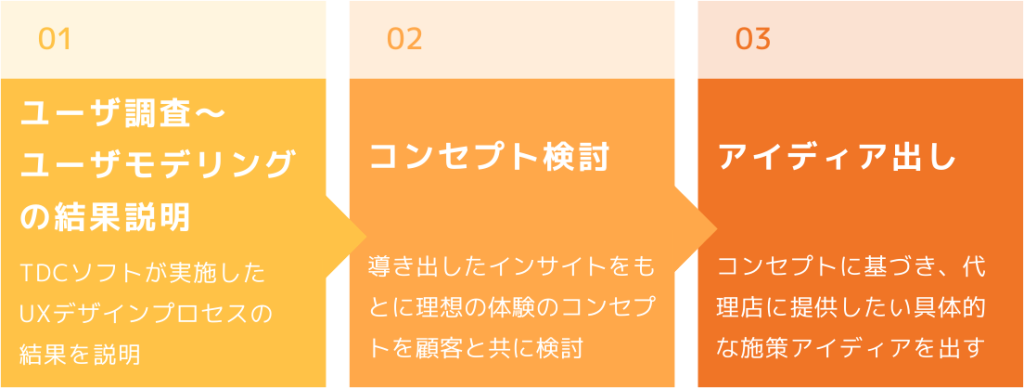
01. User Survey - Explanation of User Modeling Results
Since the process up to user modeling was conducted by TDC SOFT Inc., the results up to that point were first shared with the client, and then the actual user image was matched among the participants.
02. Conceptual study
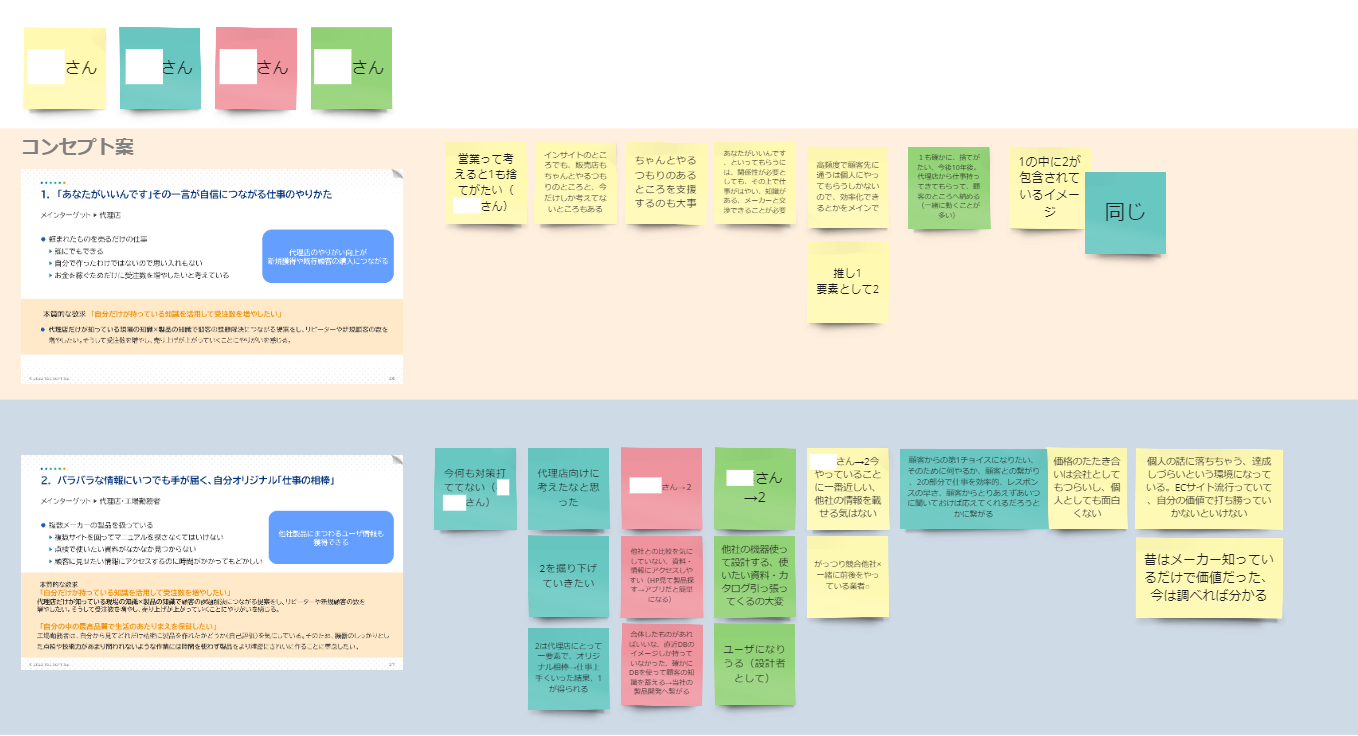
Based on the insights, we discussed the concept of the experience to be provided to the agency. Since the client was inexperienced in UX design, we did not ask them to come up with a concept from scratch, but instead developed a concept that all clients could agree on based on the candidates TDC SOFT Inc. had suggested.
03. Idea generation
Based on the insights and concepts determined, the participants came up with ideas for specific measures to be offered to the agencies. The participants used the brain dump method to generate ideas individually (brain dump) and the idea shiritori method to generate ideas through group conversation (idea shiritori), and many ideas were gathered. Afterwards, all participants discussed which ideas would be most effective and appreciated by users.
TDC SOFT Inc. took the lead in UX design with the involvement of customers, and the know-how was accumulated on the customer side, enabling customers themselves to use UX design in planning. The clients themselves are now able to use UX design to plan their own projects. In addition, the clients were able to make the planning of new services more personalized by proceeding with the project while ensuring that all parties understood and agreed with each other. In the future, when planning, we will be able to consider valuable experiences from the user’s point of view.
TDC SOFT Inc. will continue to provide support so that planning with UX design will become commonplace in the future, even for non-IT companies.
Project Summary
| Customer Industry | Specialized manufacturer of fusion cutting equipment |
|---|---|
| Involvement Process | planning |
| Participation period | Nov. 2022-Feb. 2023 (1.7 man-months of actual operation) |
| Participating Members (Clients) | Corporate Planning, Development Sales, Development |
| Participating members (our company) | UX Designer Miyako Sakai (HCD-Net Certified Human Centered Design Specialist) UX Engineer Nodoka Kuwana |
Technologies Used

UX Design
We provide support using a variety of UX design techniques to help you deliver an experience that truly delights you and your users.